Understand · Longevity Coach article
What If Maintaining Is Winning?
The Gap, The Gain and the Reality of Growing Older
By Longevity Coach ·
Topics: healthy ageing · longevity mindset · maintaining fitness · maintaining independence · Life Design
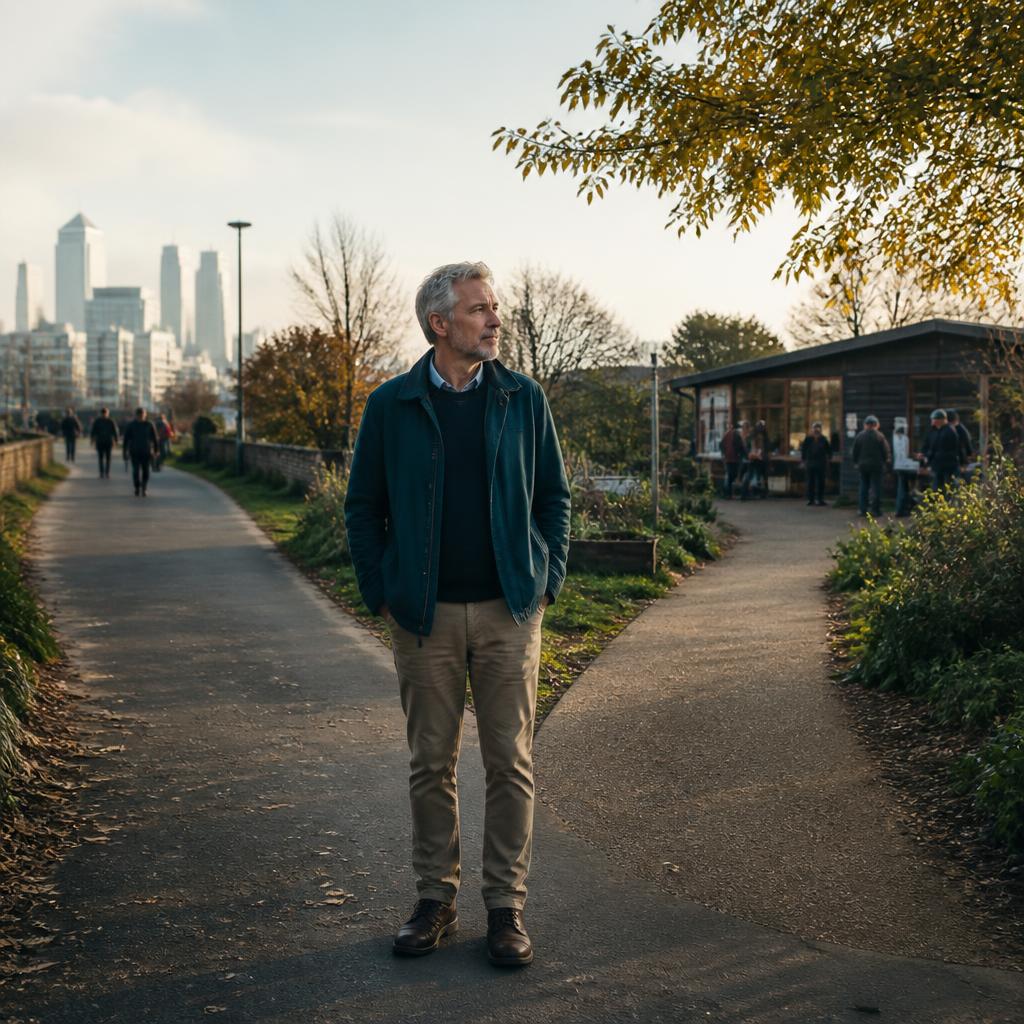
We’re constantly encouraged to improve.
Get fitter. Run faster. Lose weight. Build more wealth. Learn new skills. Become a better version of ourselves.
And there’s nothing particularly wrong with any of that.
But I’ve been thinking about a question that becomes increasingly relevant as we get older.
What happens when improvement is no longer the most realistic measure of success?
What if you’re maintaining what you’ve already achieved? Or adapting to the natural changes that come with age?
Does that mean you’re no longer making progress?
The Gap and The Gain
I’ve been reflecting on a book by Dan Sullivan and Benjamin Hardy called The Gap and The Gain.
The central idea is straightforward.
The Gap is the distance between where you are today and where you think you should be. You’re constantly looking towards an ideal you haven’t reached.
The Gain is about looking backwards and recognising how far you’ve come.
It’s a useful shift in perspective.
Instead of being frustrated that you haven’t achieved everything you wanted, you recognise what you’ve already accomplished.
But it got me thinking.
What if the person you were five years ago could do things you can no longer do today?
When the Old Measurements Stop Working
Imagine you’re a runner.
At 40, you could comfortably run 10 kilometres in 50 minutes.
At 60, you’re pleased to complete the same distance in an hour.
At 75, perhaps you’re walking 5 kilometres instead.
If you continually measure yourself against your younger self, you might conclude that you’re going backwards.
And physically, in certain respects, you probably are.
Ageing is real. We don’t need to pretend otherwise.
But is that the whole story?
At 75, being able to walk 5 kilometres, enjoy the countryside, maintain friendships and live independently might represent an enormous achievement.
The mistake is assuming that the measurements which mattered at 40 must still define success at 75.
Maintenance Deserves More Credit
There’s something rather remarkable about maintaining our capabilities as we age.
Keeping our strength, mobility, balance, relationships and independence requires effort.
And sometimes, despite that effort, things will change.
We might run more slowly. Need longer to recover. Find certain activities more difficult.
But maintaining a capability for another year can be valuable in itself.
So can adapting when maintenance is no longer possible.
Perhaps you stop running but take up hiking. Perhaps you adjust your work to allow more freedom. Perhaps you discover that what you once considered essential doesn’t matter nearly as much anymore.
None of these changes necessarily represents failure.
They might represent a different kind of success.
For more on movement and physical freedom, read about movement span and maintaining capability, or explore the healthspan pillars.
Four Ways to Think About Progress
I wonder whether we need a broader definition of progress, particularly in the second half of life.
The four categories below are our own interpretation of progress, not a framework presented by the book’s authors.
- Growth: You’re improving something. Building strength, learning a skill or developing a relationship.
- Maintenance: You’re preserving something important. Your fitness, independence, friendships or financial security.
- Slower decline: Something is becoming more difficult, but your actions may be helping you retain capabilities for longer.
- Adaptation: You’re finding new ways to live well when circumstances change.
These aren’t all gains in the conventional sense. Losing a capability is still a loss, even when we manage it well.
But they can all represent worthwhile achievements.
And perhaps that’s the distinction we need to make.
Progress isn’t always about becoming more capable. Sometimes it’s about responding well to the reality of our lives.
The Danger of Turning Longevity Into Another Competition
There’s another problem worth considering.
Longevity has become increasingly focused on numbers.
Biological age. VO₂ max. Resting heart rate. Muscle mass. Sleep scores. Steps.
These measurements can be useful. They can help us understand our health and make better decisions.
But they can also become another version of The Gap.
We’re 60, comparing ourselves with someone who’s 40. Or 70, frustrated that we can’t perform as we did at 55.
We can become so focused on extending life and preserving performance that we forget to enjoy the life we’re actually living.
And that’s a rather unfortunate outcome for something that’s supposed to help us live better.
Sometimes Acceptance Is an Achievement
This might be the hardest part.
Not everything can be improved, maintained or even slowed down.
Illness happens. Circumstances change. People we love grow older. We lose things that matter.
There’s no value in pretending every loss is secretly a gain.
Sometimes life is difficult, and accepting that reality is more useful than desperately searching for a positive interpretation.
But acceptance doesn’t have to mean giving up.
It can mean recognising what has changed, deciding what still matters and putting our energy into the things we can influence.
We might lose some physical capabilities while gaining perspective, patience, freedom or a deeper appreciation of ordinary experiences.
And sometimes the achievement is simply continuing to participate in life.
A Different Question to Ask Yourself
Rather than always asking:
Am I better than I was last year?
Perhaps we should also ask:
- What have I managed to preserve?
- What have I adapted to?
- What matters to me now that didn’t matter before?
- Am I spending my time on things that make my life worthwhile?
- Am I living well with the capabilities and circumstances I have today?
These questions don’t abandon ambition.
They simply recognise that ambition can change with age.
If you want to explore what matters next, the Life Design programme starts with your priorities. The steps behind goal-setting and personal development show how those priorities can become practical choices.
At 40, success might mean running a marathon in under four hours.
At 70, success might mean completing a marathon.
At 85, success might mean getting out for a walk, meeting friends and remaining involved in the world.
Different goals. Different circumstances. Still a life worth pursuing.
The Real Gain
I still like the philosophy behind The Gap and The Gain.
Looking backwards and recognising what we’ve achieved is a valuable antidote to constantly chasing the next thing.
But as we get older, I think we need to be careful about what we’re measuring.
Our younger selves shouldn’t become another impossible ideal.
The Gain isn’t always about having more or doing better. Sometimes it’s about keeping what matters. Sometimes it’s about adapting to what changes. And sometimes it’s about learning to value what remains.
That’s not an argument against improving ourselves.
It’s an argument for remembering why we’re doing it.
Because the ultimate aim of longevity isn’t to win a competition against ageing.
It’s to live well for as long as we can.
And sometimes, maintaining is winning.
Sources / Further reading
- The Gap and The Gain by Dr. Benjamin Hardy and Dan Sullivan (Hay House, 2021).