Understand · Longevity Coach article
AI Can Count Your Reps. But Can It Help You Live Better?
AI fitness is moving beyond steps, reps and scores. How could personalised coaching use health and lifestyle data to help us make meaningful progress over time?
By Longevity Coach Editorial Team ·
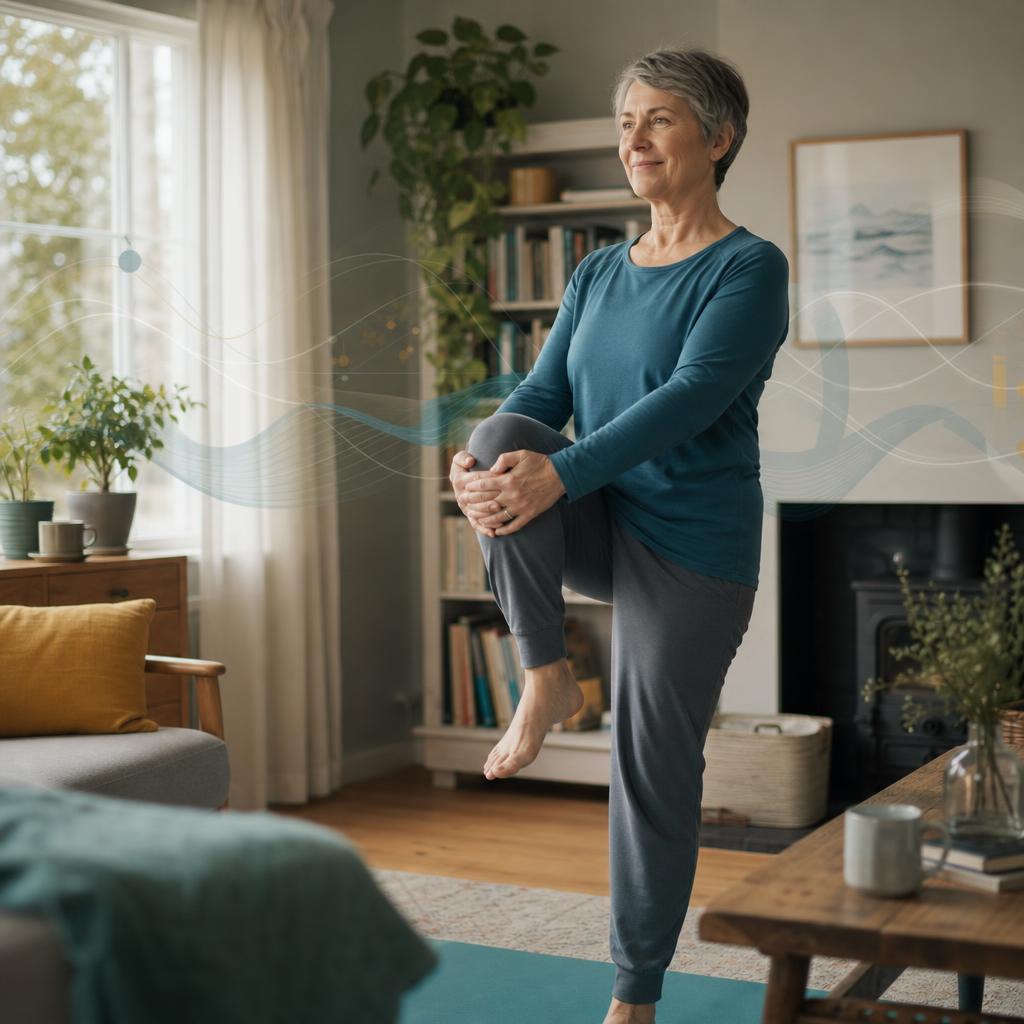
A London fitness technology company has announced an $11 million funding round for a home exercise mirror that can count repetitions and offer feedback on movement. The mirror is interesting. But the more important question is not whether it can count to twelve.
It is what happens when a tool begins to recognise a person's pattern over time and helps them make a sensible decision about what to do next.
We are already very good at collecting numbers about ourselves. We are less good at connecting those numbers to the life we want to have. Could AI fitness narrow that gap? Perhaps. But it will only be useful if it knows when to step back, not just when to speak up.
We already have more health data than we know what to do with
A watch can estimate your steps, resting heart rate and sleep. A smart scale tracks weight; a validated cuff measures blood pressure. Some devices estimate fitness, recovery or training load. A fitness app records sessions and repetitions. By breakfast, you may already have enough charts to run a small operations centre.
These measurements are not pointless. A trend in blood pressure may be worth discussing with a clinician. A record of walking can show whether you are moving regularly. A sleep diary can reveal a change in routine. But a number without context can also become an invitation to check again tomorrow, without ever deciding why it matters.
The problem is increasingly not a lack of data. It is knowing what to do with it. That is why starting with a useful baseline is different from collecting everything a device can display. A baseline should help answer a real question and support a next step, not create another score to worry about.
AI fitness is beginning to close that gap
MAGIC AI is one example of the change. Its home fitness mirror uses computer vision to follow movement, count reps and offer form feedback during a workout. According to the company's funding announcement, it guides users through more than 1,000 exercises and has recorded more than 500,000 AI-coached workouts across 150,000 hours. Those are company-reported usage figures, not proof that the system improves health or prevents disease.
News reports put its latest round at $11 million, with approximately $20 million raised in total. The company's announcement calls it an £8 million Series B and says it is expanding in the US. Exchange rates and rounded press figures vary; the point here is not the financing. It is the direction of the technology. No commercial relationship or endorsement is implied.
A rep counter can say, “You did twelve.” A more useful coaching system might notice that your movement is becoming steadier across sessions, ask whether the exercise still feels manageable and suggest a reasonable adjustment. Whether any particular product can do all of that reliably is a separate question. The opportunity is to join measurement with interpretation, and interpretation with action.
It is also worth distinguishing an interesting interface from a demonstrated clinical result. Large quantities of workout data do not automatically mean better advice for an individual. Computer vision may miss context: pain, fatigue, an old injury or the fact that you simply had a difficult day.
Tracking is not progress
Your watch says you walked 8,214 steps. Fine. Did those steps help you prepare for the hiking holiday you want next summer? Were they comfortable? Could you walk up a hill and carry a bag? The step count cannot answer those questions by itself.
Your sleep tracker estimates six hours and forty-three minutes. That figure may become useful if it helps you notice a recurring late night and change a habit you actually can change. It is less helpful if it makes one imperfect night feel like a personal failure. Our sleep and brain ageing guide explains why the pattern matters more than a single score.
A scale gives you a weight. It does not know whether losing another two kilograms matters more to you than getting stronger, seeing friends, or booking the trip you keep putting off. Some numbers are useful; none should choose your priorities for you.
Progress, not tracking. Measurement earns its place when it helps you understand a change, choose an action and live more of the life you want.
That does not mean abandoning devices. It means asking better questions of them. What is this measure for? What would change my decision? When should I seek qualified advice instead of consulting another graph?
The next step is understanding the whole person
Exercise is important, but it is only part of healthy ageing. Strength, cardiovascular fitness, balance and mobility matter alongside sleep, food and appropriate medical care. Relationships, purpose, work, money, rest and enjoyment shape what a good week looks like. The Longevity Coach pillars hold these parts together rather than turning them into competing scores.
Suppose you want to hike in the Dolomites at 70. Your walking capacity, leg strength and balance might all be relevant. So might the time to train, a friend to go with and enough confidence to say yes when the opportunity comes. And, eventually, you must actually book the trip.
That last step is not a joke about willpower. It is the difference between preparing for life and indefinitely measuring your readiness for it. An AI assistant might help you break a goal into achievable steps. It should not mistake a rising fitness estimate for the goal itself.
This is also why a useful mix of movement can matter more than squeezing one more metric out of a single activity. The aim is capability: being able to do what matters to you, in the circumstances you actually live in.
Your health data needs a purpose
Garmin devices, Apple Health and Android Health Connect can bring different activity and health signals into one place. What they cannot do on their own is tell you which signals matter most to your plans. A wearable trend is a starting point for reflection, not a diagnosis or a verdict.
Imagine that you want to walk the Camino at 65. Walking volume, how you feel on hills, strength and balance may help you plan. Resting heart rate or body weight might be useful for some people, but not everyone needs every number. Your practical actions are clearer: walk regularly, build leg strength, practise carrying a pack, allow recovery and, yes, eventually book the bloody thing.
The information becomes useful when it changes a reasonable decision: perhaps you extend a weekend walk, scale back after a niggle, or speak to a professional about persistent symptoms. Healthspan is not a dashboard. It is about living with enough health and capability to do things you value.
AI should coach, not run your life
An algorithm may be confident even when its inputs are imperfect. A wrist sensor can misread a session. Sleep-stage estimates are not sleep-laboratory results. A computer-vision model might not know that a movement hurts today. Recommendations drawn from population patterns may fit your situation poorly.
Privacy matters too. Exercise, sleep and health data can be sensitive. Before connecting an account or sending information to an AI service, ask what data is shared, why, who can access it and how you can disconnect it. More data is not automatically better coaching.
Good AI health coaching should support decisions you can understand and reject. It might summarise trends, help organise questions for a clinician, suggest a small experiment or remind you of a goal you chose. It should make uncertainty visible and leave space for preference, circumstance and common sense.
It should not diagnose disease, prescribe treatment or replace a doctor, physiotherapist, dietitian or other qualified professional. If you have concerning symptoms, persistent pain or a medical question, seek appropriate care. And if a suggested plan makes your life smaller rather than fuller, it is probably the wrong plan.
From personal trainer to personal longevity coach
A personal trainer might ask, “What should we do in the gym today?” That can be valuable. A future personal longevity coach has a wider question: “What do you want the next ten or twenty years of your life to look like, and what can you do now to give yourself a better chance of living it?”
The answer could include a strength session. It could also include a regular walk with a friend, an earlier bedtime, a conversation about blood pressure, cooking more often or making time for a new project. A Longevity Ladder can turn that bigger intention into steps you choose and revisit rather than a list handed down by a machine.
The most promising use of AI health coaching is therefore not a machine that tells everyone to optimise every measurement. It is support for noticing what is changing, understanding what matters and doing the next useful thing. Sometimes that will mean using a device. Sometimes it will mean leaving it on the kitchen table and going outside.
Progress, not tracking
Health technology is getting better at watching us. The useful next step is helping us move forward. Tracking tells you where you are; coaching helps you decide where you are going. The point of living longer is still living.
Longevity Coach is being built around that idea: progress, not tracking. Start with the life you want to design. Health, fitness and technology are tools to help you get there, not the destination.
Sources / Further reading
- LinkedIn News: MAGIC AI funding story (news hook; access may require LinkedIn).
- Dealroom: funding figures and product description.
- MAGIC AI funding announcement: company-reported product and usage claims.