Foundations · Longevity Coach article
The Humble Apple: Maybe Healthy Eating Doesn't Need to Be Complicated
An apple is not a longevity superfood. It is an affordable, useful reminder that a good-enough food pattern can beat a perfect plan you never repeat.
By Longevity Coach Editorial Team ·
Healthy eating has become surprisingly elaborate. There are powders to stir into water, berries with impressive passports, personalised nutrition reports and a steady stream of foods described as if they have just been discovered by a laboratory.
Then there is the apple. It sits quietly in the fruit bowl, costs relatively little, needs no recipe and is usually available in the supermarket at the end of an ordinary Tuesday. It is not a longevity superfood. It is something more useful: a reminder that healthy eating can be simple enough to repeat.
An apple is nutritious, not magical
Apples provide fruit, fibre, water and a range of vitamins and plant compounds. They are also naturally sweet, portable and easy to pair with other foods. If an apple replaces biscuits, sweets or a highly processed snack, that may improve the overall pattern of the day.
But the apple itself is not a shield against disease. No single food prevents dementia, cancels smoking or compensates for an otherwise poor diet. Research on fruit intake usually concerns dietary patterns and repeated habits, not a special power possessed by one particular variety of apple.
The useful question is not “How many years does this apple add?” It is “Does this make the food I am likely to eat today a little more nourishing and satisfying?”
What about fibre and pectin?
Much of an apple’s fibre is in and around the skin. It includes pectin, a type of soluble fibre that can hold water and be fermented by gut bacteria. Fibre supports normal bowel function and can contribute to a more satisfying meal or snack. A varied fibre intake is also associated with better cardiovascular and metabolic health.
That does not justify the internet’s more dramatic microbiome claims. The gut is a complex ecosystem, and a food that changes some bacterial activity in a laboratory or short study has not automatically been shown to prevent a disease. Pectin is not a reason to buy an expensive apple extract.
Eat the whole fruit if you enjoy it and can do so comfortably. Wash it, keep the skin where appropriate, and remember that different fruits and vegetables bring different fibres and nutrients. Variety is more useful than trying to optimise a single piece of fruit.
Whole fruit is different from fruit-flavoured health food
An apple comes with water and fibre, and eating it takes a little time. Apple juice has less fibre and is easier to consume quickly. Smoothies can fit into a diet, but they are not identical to chewing whole fruit. A cereal bar with apple flavour is a different food again; the word “apple” on the packet does not tell you its overall nutritional quality.
This is not a call to fear juice or packaged food. It is simply a reminder to look at what you are actually eating rather than the health halo around an ingredient. Whole fruit is a straightforward default because it is filling, convenient and usually requires no nutritional detective work.
What matters more than the apple
The dietary pattern around the apple matters. A pattern that regularly includes vegetables, fruit, pulses, whole grains, nuts, seeds, fish or other suitable protein, and unsaturated fats has a stronger evidence base than a list of isolated “superfoods”. It also supports cardiovascular health, which is relevant to brain health too.
Our guide to brain and vascular health explains why blood pressure, cholesterol, movement and smoking matter alongside food choices. Our cooking-oils guide makes a similar point about fats: what replaces what, and the overall pattern, usually matter more than a viral verdict about one ingredient.
An apple while smoking, never moving and ignoring high blood pressure is not a brain-health strategy. An apple eaten as one small part of a varied, enjoyable diet is a perfectly sensible choice. Both statements can be true.
Five easy ways to eat an apple
Apple and a handful of nuts
The apple provides carbohydrate and fibre; nuts add texture, protein and unsaturated fat. Keep the portion modest if you are eating between meals, and choose plain nuts if that suits you. This is not a compulsory “balanced snack”; it is simply a useful combination when you want something that lasts longer than a sweet.
Apple and yoghurt
Slice an apple into natural or Greek yoghurt. Add cinnamon if you like it. Yoghurt can contribute protein and calcium, though people’s dietary needs and tolerances differ. Choose the version that fits your life rather than turning the snack into a contest over labels.
Chopped apple, oats and cinnamon
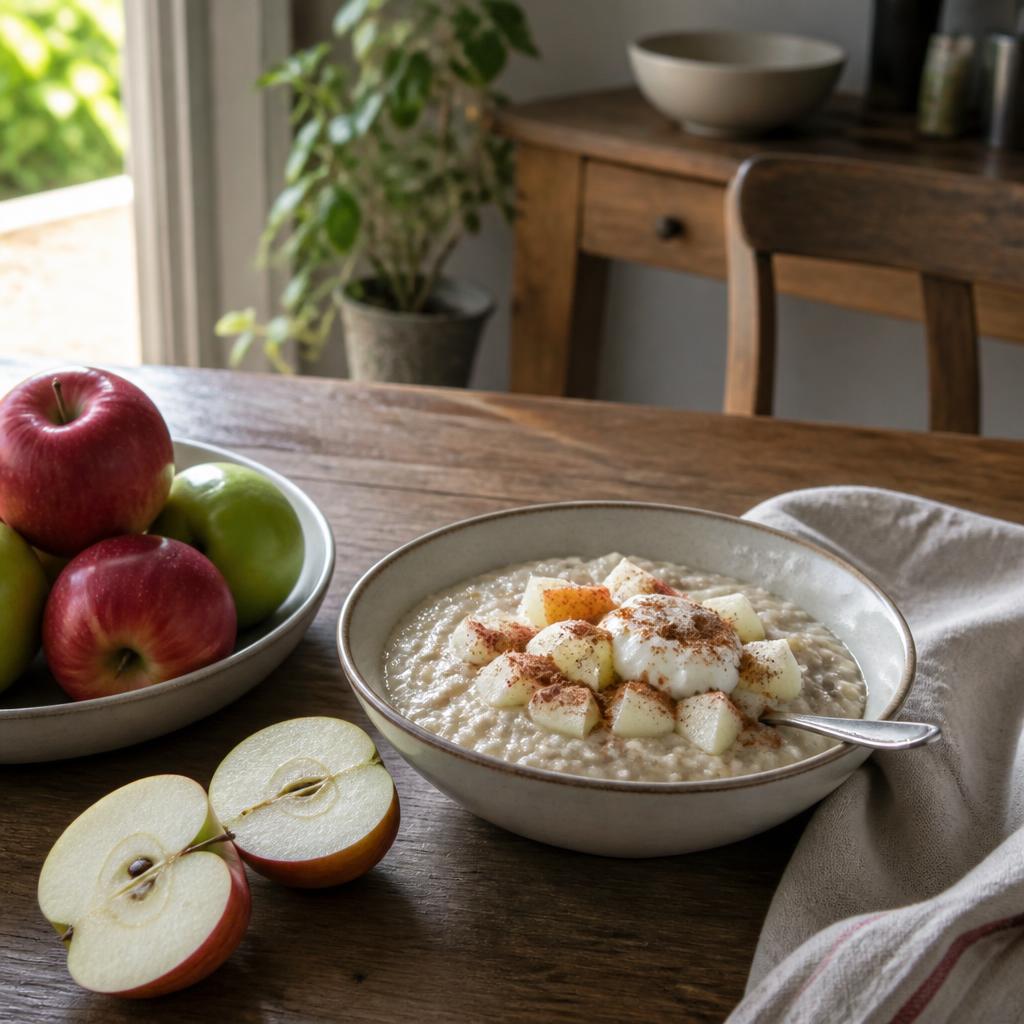
Add chopped apple to porridge or overnight oats. Oats bring their own fibre, and the apple adds sweetness and texture. If you need more energy, add nuts or seeds. If you dislike porridge, do not force it: a food only helps when you will actually eat it.
Apple in a salad
Thin slices work well with leaves, beans, lentils, cabbage, cheese or leftover chicken. The contrast between crisp fruit and savoury ingredients can make a simple lunch more appealing. A meal that is appealing is more likely to be repeated than a theoretically perfect lunch you resent.
A simple baked apple
Bake an apple with cinnamon and a little water until soft. Add yoghurt or oats if you want a more substantial pudding. You do not need to turn it into a sugar-free performance. The point is an easy dessert that tastes like itself.
Make the healthy choice visible
Convenience is not a character flaw. Most people eat in the conditions they have: between meetings, after school runs, when caring for someone, or when dinner has to happen before a late shift. Put fruit where you can see it. Keep washed apples in a bowl or bag. Buy frozen fruit when fresh food spoils before you reach it. Keep a few reliable options at work.
These are small environmental changes, but they reduce the number of decisions required. Healthy eating does not need to become a second job with a spreadsheet and a moral score. A repeatable option is often more valuable than an ambitious plan that survives for four days.
What if you do not like apples?
Nothing special happens if you do not eat them. Pears, oranges, bananas, berries, plums and other fruit can all be part of a varied diet. Frozen berries are useful; tinned fruit in juice can be practical; vegetables matter just as much. The goal is not to comply with an apple rule. It is to make fruit and plant foods easier to include in the pattern you can sustain.
Likewise, an apple does not have to be organic, a particular colour or an expensive heritage variety to count. Choose the one you enjoy and can afford. If the skin causes discomfort, peel it; a peeled apple is still an apple.
Good enough, often, beats perfect occasionally
The humble apple makes a useful symbol because it resists the drama of the wellness market. It offers fibre and fruit, but not a miracle. It can replace a less nourishing snack, but it cannot do the work of a whole diet. It fits breakfast, lunch, a walk, a desk drawer and a pudding.
That matters for longevity because the habits that support a long, capable life have to survive real life. They need to work when you are busy, tired, travelling or feeding other people. A food plan that is slightly ordinary but repeated is usually more helpful than a perfect plan that requires a fresh delivery of powders every week.
So buy an apple if you like apples. Put it somewhere visible. Eat it with something that makes the snack satisfying. Then turn your attention to the wider meal, the wider week and the wider life. The point is not to make the apple carry your future. It is to stop making healthy eating harder than it needs to be.
Sources / Further reading
- SuperAging: “Good for Brain and Body: Why You Should Eat More Apples” (discovery source).
- NHS: 5 A Day — what counts?, including practical fruit and vegetable guidance.
- World Health Organization: Increasing fruit and vegetable consumption.
- Review: Does an apple a day keep away diseases? Evidence and mechanisms.
- NHS: The Eatwell Guide.