Maintain · Longevity Coach article
You Spend Most of Your Life Indoors. What's in the Air You're Breathing?
Indoor air is shaped by what a home burns, cooks, releases and traps. Practical source control and suitable ventilation matter more than panic or buying another gadget.
By Longevity Coach Editorial Team ·
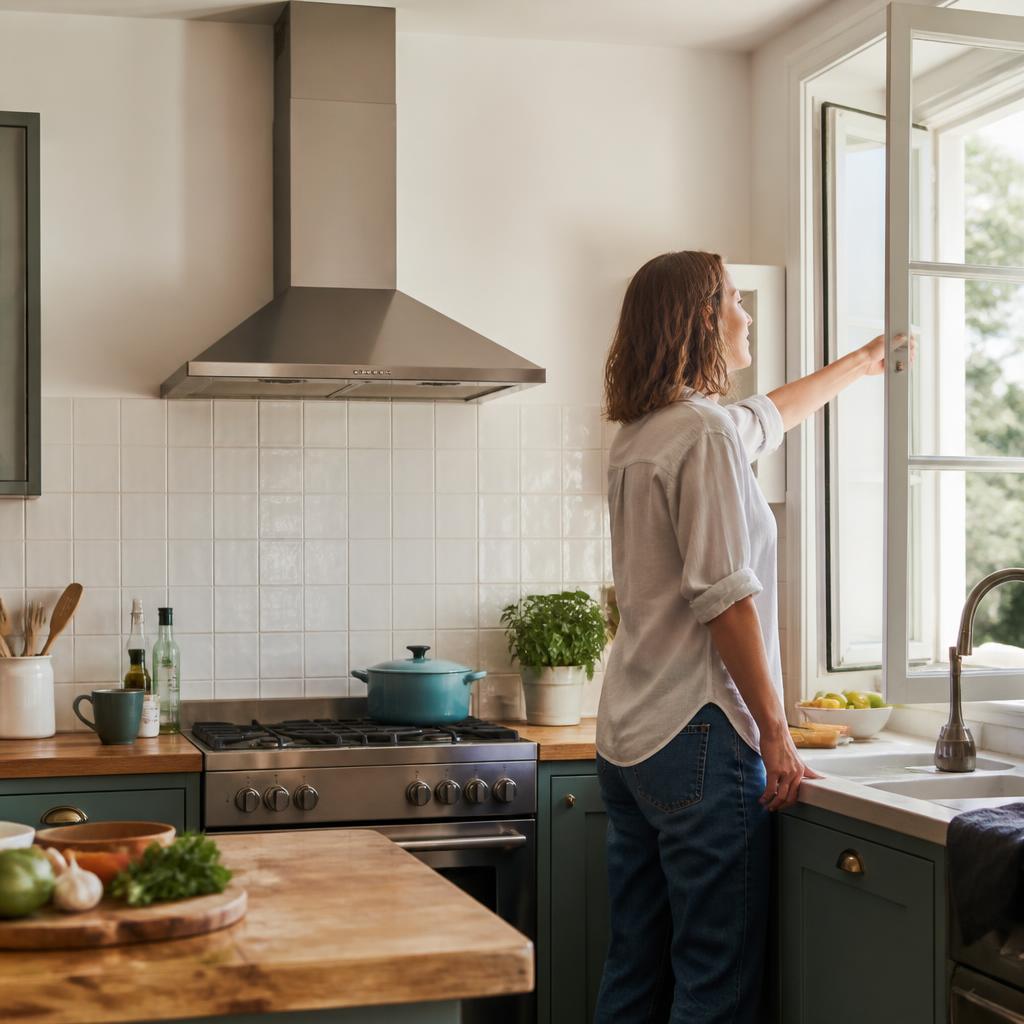
You do not need to turn your home into a laboratory to make its air healthier. Start with the things that create pollution or moisture, use ventilation when it is safe and useful, and make sure fuel-burning appliances and carbon monoxide alarms are taken seriously. Those ordinary steps are usually a better first move than trying to measure every invisible thing or buying a purifier before you know what problem you want it to solve.
Indoor air quality is not one number. Cooking, smoking, fires and heaters can release particles and gases; cleaning products, sprays, paint and new furnishings can release chemicals; damp can encourage mould; and pollution from outside can enter too. The mix varies between homes and across the day. As people spend substantial time indoors, reducing avoidable sources is worthwhile, but this is not a reason to fear your home or blame yourself for conditions you cannot control.
First ask what is happening in your home
A useful home check is practical rather than technical. Think about when cooking smells linger, whether a bathroom stays humid after a shower, whether anyone smokes indoors, whether a fire or burner is used, and whether you can see condensation, a leak or mould. Notice whether there are obvious triggers such as decorating, strong cleaning sprays or new furniture. This is not a diagnosis, and there is no need to assume that every symptom has an indoor cause. It simply helps you identify a source you can address.
Air pollution includes particles, gases and chemicals from indoors and outside. A systematic review of 141 studies across 29 countries identified cooking, smoking and heating as sources of fine particles, and unvented gas cookers and heaters as important sources of indoor nitrogen dioxide. Ventilation, season and outdoor nitrogen dioxide also influenced levels. This evidence does not tell us the exact exposure in your kitchen. Manage sources sensibly, but do not compare your hob with a road or assume one appliance makes your home unsafe.
CLAIM: If you can smell cooking, your home needs a costly air monitor or purifier.
CHECK: Smell is not a reliable measure of every pollutant, and a monitor is only useful if it measures the thing you are concerned about and helps guide a decision. Before shopping, use an extractor if available, avoid letting pans smoke, and consider whether the fan actually vents outdoors. The systematic review of home air pollutants supports source control and ventilation as relevant factors, but does not establish one perfect device or a universal ventilation setting.
Ventilate with judgement, not a rule to leave windows open
Ventilation helps dilute and remove some indoor pollutants and moisture. Use a kitchen or bathroom extractor fan when cooking or bathing, if you have one, and open trickle vents where fitted. A window can help when outdoor air is acceptable and it is safe and comfortable to open it. There is no need to keep windows permanently open, especially in cold weather, when outdoor pollution is elevated, or where security, noise, accessibility or health makes that impractical.
Try to connect the action to the source: run the bathroom fan during and after a shower if that is how it is designed to be used; use the kitchen fan while cooking; and follow the manufacturer’s guidance for maintenance and filters. A recirculating cooker hood may capture some particles depending on its design and condition, but it does not remove air from the room in the same way as an extractor vented outdoors. Evidence reviewed here does not quantify the performance of typical UK cooker hoods, so avoid assuming that every hood does the same job.
A CO2 monitor may serve as a rough indicator of ventilation and occupancy, but it does not detect carbon monoxide. CO is an odourless poisonous gas produced by faulty or poorly maintained fuel-burning appliances. CO2 is a different gas; a CO2 monitor cannot replace a CO alarm.
CLAIM: A CO2 monitor will alert you to carbon monoxide from a boiler or fire.
CHECK: It will not. Fit a carbon monoxide alarm that meets BS EN 50291, follow its instructions for placement and testing, and arrange regular checks of fuel-burning appliances. NHS inform’s indoor air guidance recommends appliance checks and a compliant CO alarm. If an alarm sounds or you suspect CO, stop using appliances and evacuate immediately; do not re-enter. Call the National Gas Emergency Service on 0800 111 999 or HSE Gas Safety Advice Line on 0800 300 363, and wait for emergency-service advice before re-entering. For severe symptoms such as breathing difficulty, sudden confusion or loss of consciousness, call 999; if unwell or worried, call NHS 111, as advised by the NHS.
Cooking, heating and everyday products
Cooking can create particles, especially when food or oil is overheated, and fuel-burning appliances can release pollutants. Use an extractor where possible and avoid letting oil or food smoke. These steps reduce avoidable emissions but do not eliminate exposure. A gas cooker is not a reason for urgent replacement based on a headline: evidence reviewed here does not verify dramatic comparisons between a hob and roadside air.
Have boilers, fires and other fuel-burning appliances checked regularly by an appropriately qualified person. Do not burn indoors unnecessarily or smoke indoors. Wood burners and open fires can still produce pollution even when maintained; follow instructions and ensure you have appropriate alarm protection. For cleaning, personal-care and decorating products, follow the label, use only what you need and ventilate where appropriate. Lower-emission options may help, but you need not replace everything at once.
Damp is a building problem as well as a household habit
Moisture from showers, cooking and drying clothes can add to condensation, and ventilation may help. Damp and mould can also result from leaking pipes, rising damp, rain entering through a damaged roof or window, or other building defects. Try to identify the cause rather than assuming you caused it by living normally: ventilation cannot repair a leak.
NHS inform associates damp and mould with respiratory problems, infections, allergies and asthma; babies, children, older people and people with respiratory or immune conditions may be more sensitive. Seek professional advice if the area is extensive, persistent or unsafe to remove. If you rent, document the issue and contact your landlord or a housing adviser about repairs; routes differ across the UK.
CLAIM: Mould means the occupants have not ventilated enough.
CHECK: Not necessarily. Condensation can be one cause, but NHS inform also identifies leaks, rising damp and rain entering through building damage. Find and address the underlying moisture source; simply wiping a patch or asking someone to open windows may not solve a defect. Its guidance on damp and mould describes both building causes and practical next steps.
Do you need an air purifier or a monitor?
A portable HEPA cleaner may be an optional supplement when airborne particles are a specific concern. HEPA filtration addresses particles; it does not remove carbon monoxide, carbon dioxide, moisture or gaseous cooking pollutants. It cannot fix damp or repair an appliance.
A 2022 household study in Taiwan found lower measured PM2.5 after using portable HEPA cleaners. That does not promise the same reduction in a UK home: machine number, airflow, window ventilation and outdoor particle levels affected results. Nor does measured reduction establish a health benefit for every purchaser. Consider room suitability, noise, running costs and filter replacement. The study report supports particle reduction in that setting, not a universal result.
CLAIM: A HEPA purifier cleans all the important pollutants in a home and guarantees better health.
CHECK: HEPA is a particle filter, not a general-purpose gas, CO or moisture remover. One household study reported reduced PM2.5 in its specific setting, but the evidence reviewed here does not establish guaranteed health outcomes or a standard result in UK homes. Fix combustion and damp problems, reduce sources and ventilate appropriately first; consider filtration only if it addresses a specific remaining particle concern.
A manageable plan for this week
Start without a shopping list. Choose one action that fits your home:
- Check safety: Confirm you have an appropriate CO alarm, check its expiry and test it as instructed. Arrange regular checks for fuel-burning appliances.
- Make ventilation routine: Use kitchen and bathroom extractor fans, open trickle vents where fitted, and open windows when outdoor air is suitable and it is safe to do so.
- Reduce sources: Do not smoke indoors; avoid unnecessary indoor burning; use sprays and cleaning products as directed; and avoid letting cooking smoke.
- Follow moisture: If you see damp or mould, note where and when it appears. Look for leaks or building damage and seek repairs rather than treating it as a personal failure.
- Buy only for a defined reason: Before choosing a monitor or purifier, name the pollutant or decision it is meant to address. If you cannot, pause the purchase.
Some fixes are not yours to make alone. Ask a landlord, housing adviser or qualified professional about defects or appliance safety. NHS inform is Scottish health guidance and housing law varies by nation. In England, regulations require landlords of relevant rented homes to provide alarms in specified circumstances, including a CO alarm in a room with a fixed combustion appliance other than a gas cooker, and to repair or replace a faulty reported alarm as soon as reasonably practicable. This is not a universal UK owner-occupier rule; check local guidance and the 2022 alarm regulations.
Indoor air is one part of a healthy home, not a private project you need to perfect. A reliable alarm, a working extractor, addressing a leak and avoiding unnecessary smoke are concrete improvements. The wider Longevity Coach pillars offer a useful reminder that healthy ageing comes from many connected parts of life. Give the highest priority to safety and repairs, then make the practical changes you can sustain.
Sources / Further reading
- NHS inform: Indoor air pollution (updated 5 August 2026).
- NHS inform: Damp and mould indoors (updated 31 July 2026).
- The Smoke and Carbon Monoxide Alarm (Amendment) Regulations 2022.
- Vardoulakis et al., “Indoor Exposure to Selected Air Pollutants in the Home Environment: A Systematic Review”, International Journal of Environmental Research and Public Health (2020).
- Chen et al., “Efficacy of HEPA Air Cleaner on Improving Indoor Particulate Matter 2.5 Concentration”, International Journal of Environmental Research and Public Health (2022).
Educational disclaimer: This article is for general education, not diagnosis or individual medical, building-safety or legal advice. If you have symptoms, a suspected carbon monoxide exposure, a faulty appliance, or persistent damp, contact the appropriate health, emergency, housing or qualified repair service for advice relevant to your situation.