Strength · Longevity Coach article
Yoga and Longevity: Forget Living to 105 — Can It Help You Live Better Now?
Yoga is not a recipe for reaching 105. But can it help you stay mobile, steady and more at home in your body? Here is what the evidence suggests, and where yoga fits alongside other movement.
By Longevity Coach Editorial Team ·
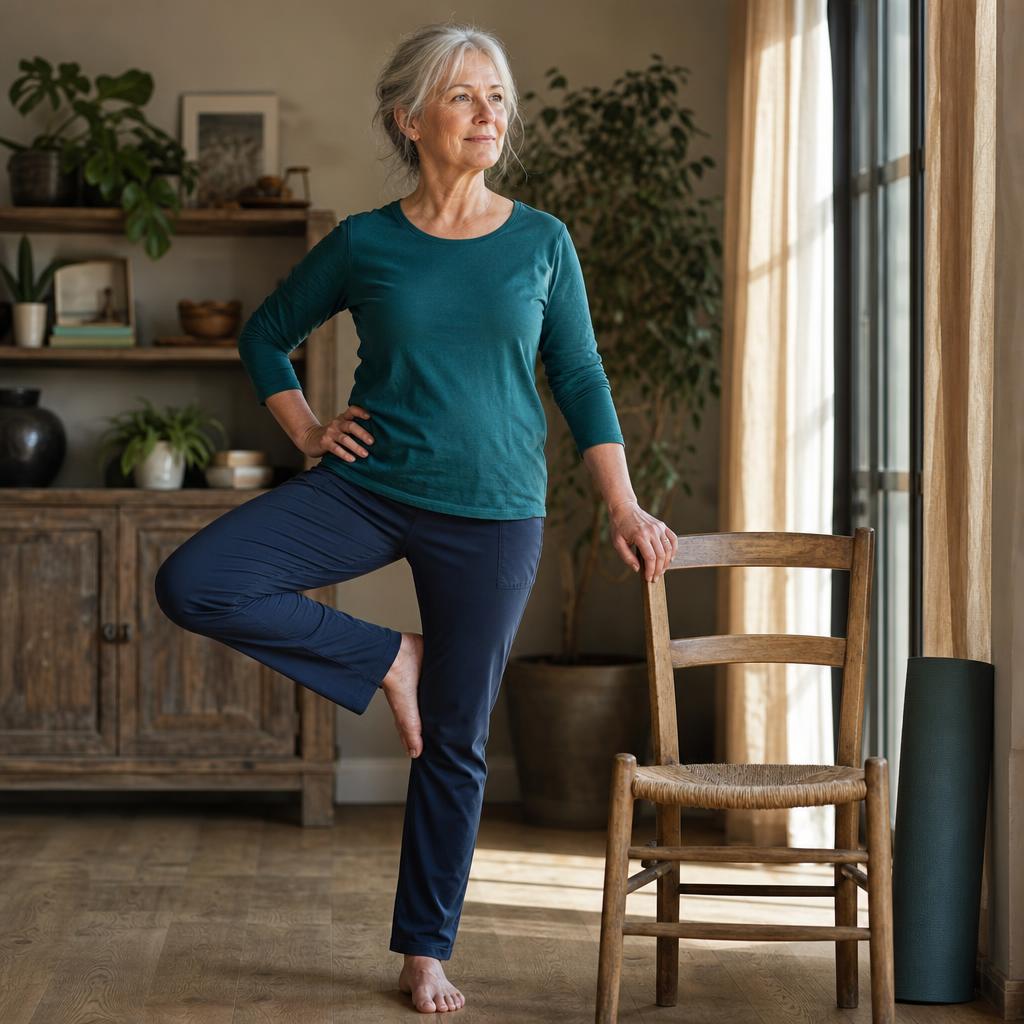
Somewhere in the world, a person who practises yoga has reached 105. It is a lovely story, but it is not evidence that yoga made them live that long. They may have benefited from good genes, supportive relationships, a favourable environment, medical care, luck, or a mix of factors no anecdote can disentangle.
A more useful question for the rest of us is smaller and more immediate: could yoga help us keep doing the things we want to do? Reach the top shelf, get up from the floor, walk confidently across uneven ground, carry shopping, turn to talk to a friend, or enjoy a weekend away without feeling that our body has become an awkward piece of luggage?
For many people, yoga can be one helpful way to practise those capabilities. It is not a longevity guarantee, and it does not do every kind of exercise. Its value is more down to earth: regular, adaptable movement that develops body awareness, mobility, balance and, in some styles, strength.
Yoga is a family of practices, not one workout
Yoga can involve physical postures, breathing practices and meditation, with very different emphasis from one class to another. A gentle floor-based session, a chair class and a fast-flow class may all use the word yoga while asking quite different things of the body. That variation also makes research harder to compare: studies do not always mean the same intervention when they say “yoga”.
Reviews suggest yoga may improve balance, flexibility and some measures of lower-body strength, including among older adults. The evidence is encouraging, not a promise that every participant will see the same gains. Small studies, varied teaching and limited follow-up make confident claims about preventing falls or preserving independence over decades difficult.
Yoga may also support stress management, sleep and wellbeing for some people. Those outcomes matter in their own right. But it would be too strong to say a yoga class prevents cardiovascular disease, dementia or early death. Improvements in a risk factor or a short-term wellbeing score are not proof of longer life.
Mobility is freedom in ordinary clothes
Mobility is not a party trick involving a foot behind your head. It is being able to move through the range your life asks of you, with enough control and confidence. You might need to kneel in the garden, step over a suitcase, reach for a seat belt, turn while carrying a plate, or stand from a low chair.
Yoga can give those everyday movements a place to be practised. A supported lunge explores stepping and balance. A gentle twist rehearses turning. Moving between standing and the floor can make the transition feel more familiar. Props, a wall or a chair are not signs of failure; they are tools for adjusting the task to the person doing it.
This is why the most useful question is not whether a pose looks impressive. It is whether practice is helping you do more of what matters, with a little less hesitation. If your aim is to travel, for instance, you might value getting on and off the floor, walking for longer and carrying a day bag more than touching your toes.
There is no single flexibility score that captures that. The case for a varied movement routine is that different activities train different capacities. A class can be one part of that variety rather than the whole plan.
Balance, strength and the limits of one practice
Balance is trainable, but falls are complicated. Vision, medicines, home hazards, sensation, strength, confidence and health conditions can all play a part. Some studies find balance improvements after yoga; that does not mean yoga alone has been shown to prevent every fall. If falls or unsteadiness are already a concern, speak with a GP or physiotherapist about an appropriate assessment and plan.
Some yoga styles are physically demanding, and holding or moving between poses can challenge muscles. Yet the amount of strength work varies. A restorative class is not the same as progressive resistance exercise, where muscles are challenged and the load can be gradually increased. If building strength is a priority, weights, resistance bands or suitable body-weight exercises may be more direct.
The same distinction applies to aerobic fitness. Yoga may raise the heart rate, especially in vigorous classes, but many sessions will not provide the sustained moderate-intensity activity that brisk walking, cycling or swimming can. The NHS advises adults aged 65 and over to include daily activity, aerobic activity, and strength, balance and flexibility work. For people younger than 65, the general adult guidance also includes regular aerobic activity and muscle strengthening. Yoga can contribute to parts of that picture, but it need not carry the whole load.
Think of it as a useful member of the movement team. A week could include a brisk walk, two short strength sessions and a class you enjoy. Or it might involve tai chi, Pilates, dancing, gardening and home exercises. The best mix is the one that suits your health, preferences and actual calendar—not an imaginary calendar belonging to someone with no job, commute or laundry.
Can yoga help with pain or sleep?
For some people with persistent low-back pain, yoga may offer small improvements in pain or function compared with doing no exercise. It is not clearly superior to other forms of exercise, and it is not a cure. A good teacher can offer options, but pain that is severe, new or changing deserves individual advice rather than a determination to push through a pose.
Relaxation and a regular wind-down routine may help some people sleep or feel less stressed. But trials vary, and yoga is not a replacement for assessment or treatment when sleep problems, anxiety or low mood are persistent. A class that leaves you feeling calmer is a worthwhile experience even if it does not transform a clinical outcome.
The social part can count too. Attending a class creates a recurring reason to leave home, see familiar faces and build a small shared routine. That may be one of the most enjoyable benefits—and it is different from claiming that a particular posture changes the biology of ageing.
Do I actually need to do yoga?
No. Yoga is a practice, not an entrance exam for healthy ageing. If it does not appeal, or a particular form does not suit your body, there are other ways to work on similar capabilities:
- Pilates can develop controlled movement and trunk strength.
- Tai chi combines flowing movement with balance and coordination practice.
- Mobility work and stretching can help you practise comfortable ranges of movement.
- Strength training builds capacity for lifting, carrying and getting up.
- Walking, dancing or cycling can support cardiovascular fitness and everyday activity.
- Functional practice—such as repeated chair rises or supported step-ups—can rehearse tasks you want to feel easier.
There is no need to do all of these. Start with what you want your body to help you do, and choose a manageable way to practise. If you have a long-term condition, recent injury, balance problems or have not been active for a while, ask a healthcare professional or qualified instructor how to adapt activity safely. Start at a level that feels appropriate and build gradually.
Make practice serve the life you want
Try a simple test after a few weeks: what feels easier, more comfortable or more possible? Perhaps you can get down to the floor and back up with less effort. Perhaps you have found a class that makes Tuesday feel brighter. Perhaps you prefer strength training and a walk with a friend. All are useful discoveries.
Strength and loading matter for bones as well as muscles, while the broader Longevity Coach pillars help put movement alongside sleep, connection and the other parts of a life that feels good. Yoga may support your mobility; it cannot choose what you want that mobility for.
For more on the shared ground between movement and cardiovascular and brain health, see our guide to protecting your brain by protecting your heart. Keep the ambition practical: not living to a particular age, but maintaining enough strength, balance and ease to keep saying yes to things that matter to you.
Sources / Further reading
- SuperAging: Is Yoga Another Centenarian Secret? (discovery source; an anecdote is not evidence of cause).
- US National Center for Complementary and Integrative Health: Yoga—Effectiveness and Safety.
- NHS: Physical activity guidelines for older adults.
- Systematic review and meta-analysis: yoga, physical functioning and quality of life in older adults.