Foundations · Longevity Coach article
Forget the Top 10 Brain Foods — Eat for the Brain You Want at 70
Blueberries and nuts can be nutritious, but cognitive health is not won by one superfood. A practical UK guide to dietary patterns, vascular health and an ordinary brain-friendly basket.
By Longevity Coach Editorial Team ·
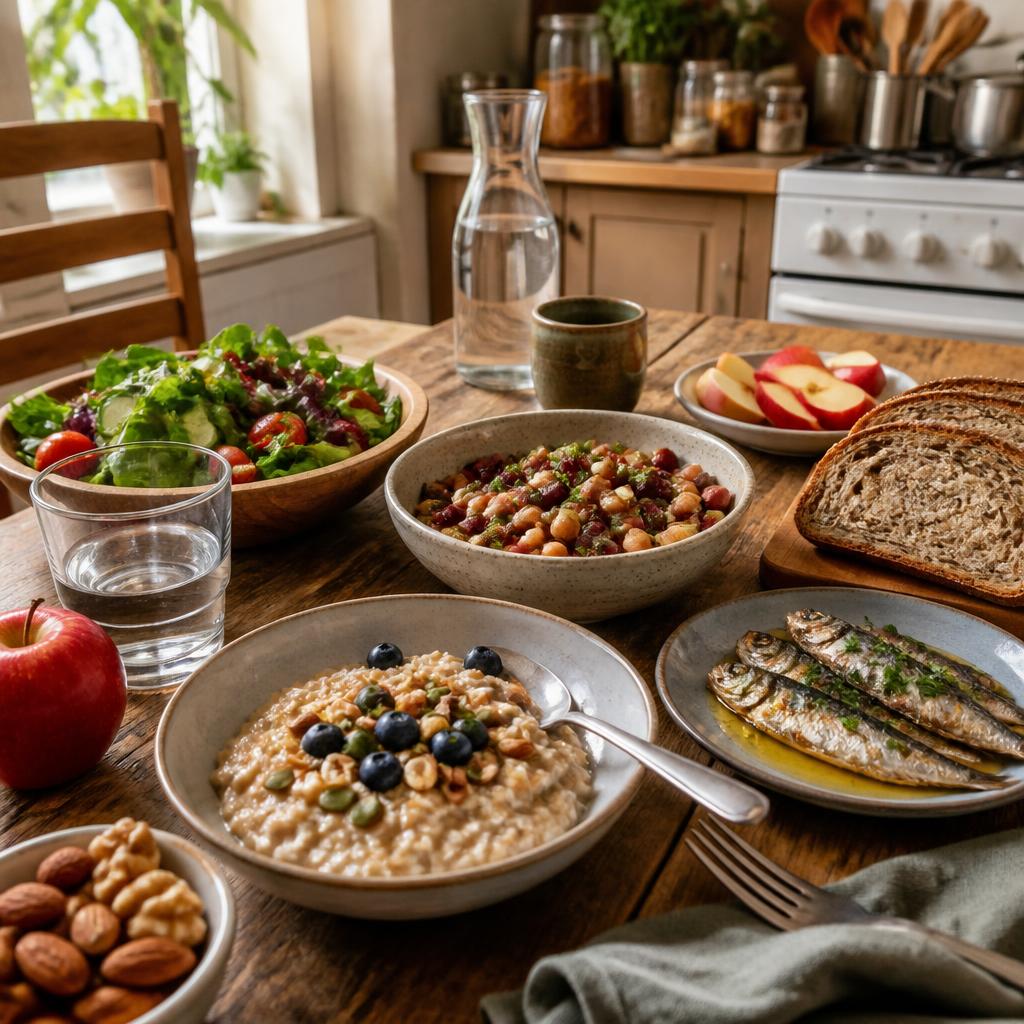
The internet would like brain health to be a shopping list. Eat blueberries for memory, walnuts for concentration, oily fish for the brain, leafy greens for ageing well. There is a comforting neatness to the idea. Buy the right ten foods and the future takes care of itself.
Real life is less tidy and more encouraging. Blueberries, nuts, fish and vegetables can all be useful foods. But cognitive health does not hinge on a particular berry, and no individual food prevents dementia by itself. What seems more sensible is to build an eating pattern that supports the brain by also supporting the blood vessels, metabolism, energy and enjoyment that keep a person living well.
Why the pattern matters more than the headline ingredient
Brain cells need energy and oxygen, delivered through a vascular system that is affected by blood pressure, smoking, cholesterol, diabetes, physical activity and other parts of life. That does not mean food is a treatment for every neurological condition. It means that a diet should be considered alongside the rest of the health picture.
Mediterranean-style eating patterns are generally rich in vegetables, fruit, pulses, whole grains, nuts, fish and unsaturated fats, with less red and processed meat and fewer foods high in saturated fat. The MIND diet adapts some of these ideas with an emphasis on leafy greens, berries, beans, nuts, whole grains, fish and poultry. Observational studies have often found that people whose diets resemble these patterns have lower rates of cognitive decline. That is an association, not proof that the pattern prevents dementia.
Ultra-processed foods belong in this wider conversation, but they are not a single nutritional category with one effect. Some packaged foods are high in salt, free sugars or saturated fat and can crowd more nourishing choices out of a diet. Others, such as some wholemeal breads or fortified alternatives, may be practical parts of everyday eating. Observational research has reported links between higher intake and poorer health outcomes, including cognitive outcomes, but studies are still limited and cannot show that processing alone causes dementia. The useful question is what the food provides, how often you eat it and what it replaces—not whether a packet is automatically harmful.
The distinction matters. People who eat more vegetables may also smoke less, have more resources, exercise more, sleep differently or receive better healthcare. Researchers can adjust for some factors, but no adjustment makes an observational study into a randomised trial.
The MIND trial was useful precisely because it was less dramatic
A 2023 randomised trial tested a low-salt MIND-style diet with mild calorie restriction against a control diet with mild calorie restriction and support. Both groups improved their diet quality and cognitive scores over three years. The difference in cognitive decline between the two arms was not statistically significant.
That result does not mean food is irrelevant or that vegetables suddenly became pointless. It does mean we should not present the MIND diet as a proven prescription for preventing cognitive decline. Randomised evidence is usually more modest than a “top ten foods” headline. It asks whether a defined intervention adds a meaningful benefit beyond what the comparison group also receives. In this trial, the answer was not a significant difference between arms.
Our guide to brain and vascular health puts the same idea in context: caring for blood pressure, cholesterol, diabetes risk, movement and smoking is not separate from caring for the brain. Nor is food a substitute for clinical assessment when memory or thinking changes are persistent or concerning.
What belongs in a useful everyday pattern?
Vegetables and fruit: Fresh, frozen and tinned options can all count. Leafy greens provide fibre and micronutrients; fruit brings fibre and sweetness without needing a marketing department. Berries are a good choice if you enjoy them, but apples, oranges, pears and whatever is affordable also have a place. No fruit needs to pass an anti-ageing audition.
Whole grains: Oats, wholegrain bread, brown rice and wholewheat pasta can provide fibre and make meals more sustaining. A gradual switch is fine. The best whole grain is usually the one you will actually cook and eat.
Pulses and nuts: Lentils, beans, chickpeas and peas are versatile sources of fibre and plant protein. Mixed nuts can be convenient, though portions matter because they are energy-dense. Choose unsalted versions when practical. Peanut butter can be useful too; it does not need an exotic label to count.
Fish and unsaturated fats: Oily fish such as sardines, salmon and mackerel provide omega-3 fats. For people who eat fish, including it as part of a balanced pattern can be sensible. Olive and rapeseed oils are practical sources of unsaturated fat. Our cooking-oil guide explains why the fat you replace matters more than declaring one bottle a miracle.
Yoghurt and other ordinary foods: Plain or lower-sugar yoghurt may fit comfortably into meals or snacks, depending on preference and dietary needs. Eggs, poultry, tofu, dairy alternatives and other protein foods can also be part of a varied diet. There is no prize for making lunch look like a laboratory.
A brain-friendly supermarket basket
Try starting with oats, lentils, beans, frozen berries, apples, leafy vegetables, mixed nuts, wholegrain bread, extra-virgin olive oil, rapeseed oil, oily fish and yoghurt where appropriate. Add the foods your household enjoys. Frozen spinach is still spinach; tinned beans are not a moral failure; a bowl of porridge is allowed to be breakfast without becoming a ritual.
One simple week might include porridge with chopped apple and yoghurt; lentil soup with wholegrain bread; beans added to a tomato sauce; a handful of nuts with fruit; and oily fish with vegetables and potatoes. These examples are not a prescription. They are prompts for reducing friction. Healthy eating needs to survive a late train, a difficult child, a tired carer and the day when nobody wants to wash six pans.
Do not let a blueberry distract you from blood pressure
A handful of berries can sit comfortably beside an untreated health problem, but it cannot cancel one. If you smoke, are inactive, drink heavily or have high blood pressure, those are important conversations for brain and cardiovascular health. If your cholesterol or diabetes needs monitoring, food choices can be part of the plan, but they do not replace advice from a clinician.
This is not an argument for fear. Individual foods are not moral categories, and an occasional biscuit does not age your brain on contact. It is an argument for proportion. The biggest gains usually come from the pattern you repeat: more plants and fibre, sensible fats, enough protein and energy, less smoking, movement that fits your life, adequate sleep and appropriate medical care.
Alcohol deserves the same calm honesty. Drinking less can benefit health, and no one should be told that red wine is required for brain protection. If changing your drinking feels difficult, support from a GP or a specialist service is more useful than a food ranking.
Food, enjoyment and the life you want at 70
Eating for brain health is not a project to make every meal virtuous. Food is nutrition, culture, pleasure, memory and company. A shared curry, a Sunday roast or cake at a friend's birthday can belong in a healthy life. The aim is a pattern that leaves room for enjoyment and makes it easier to do the things you care about.
Imagine the brain you want at 70 not as a perfect scan but as a person who can follow a conversation, find their way to a favourite place, cook something familiar, learn a new skill and stay connected to people. Food may support that ambition indirectly through cardiovascular and metabolic health. So may walking, strength work, sleep, hearing care, social contact and treating depression when it occurs.
Progress can be modest. Put fruit where you can see it. Add beans to one meal. Buy frozen vegetables for the week you know will be busy. Replace some butter with olive or rapeseed oil if that swap suits you. Cook with someone else. These are not glamorous interventions, but good enough, often, beats perfect occasionally.
There is no magic brain food
The honest answer to “What should I eat for my brain?” is a pattern you can afford, enjoy and repeat, alongside the wider care your health needs. Mediterranean-style and MIND-style patterns offer useful ideas, but their observational associations should not be advertised as guaranteed prevention, and the 2023 randomised trial did not find a significant difference in cognitive decline between its two diet groups.
Eat the apple. Add the lentils. Enjoy the berries if you like them. Then remember that a brain-friendly life is larger than a shopping list. Explore our practical guide to simple healthy eating, keep an eye on the health factors that matter most, and make meals part of a life you actually want to live.
Sources / Further reading
- SuperAging: top foods for brain health (discovery source).
- New England Journal of Medicine: 2023 randomised MIND diet trial.
- World Health Organization: 2026 guidelines on reducing cognitive decline and dementia risk.
- NHS: healthy eating and a balanced diet.
- US National Institute on Aging: diet and Alzheimer’s prevention evidence.
- Systematic review and meta-analysis: ultra-processed food intake and dementia risk; observational associations do not establish causation.