Understand · Longevity Coach article
Who Will Be There for You? The Part of Longevity We Rarely Plan For
Retirement plans often cover money and health. What about the people and places that make everyday help, companionship and belonging possible?
By Longevity Coach Editorial Team ·
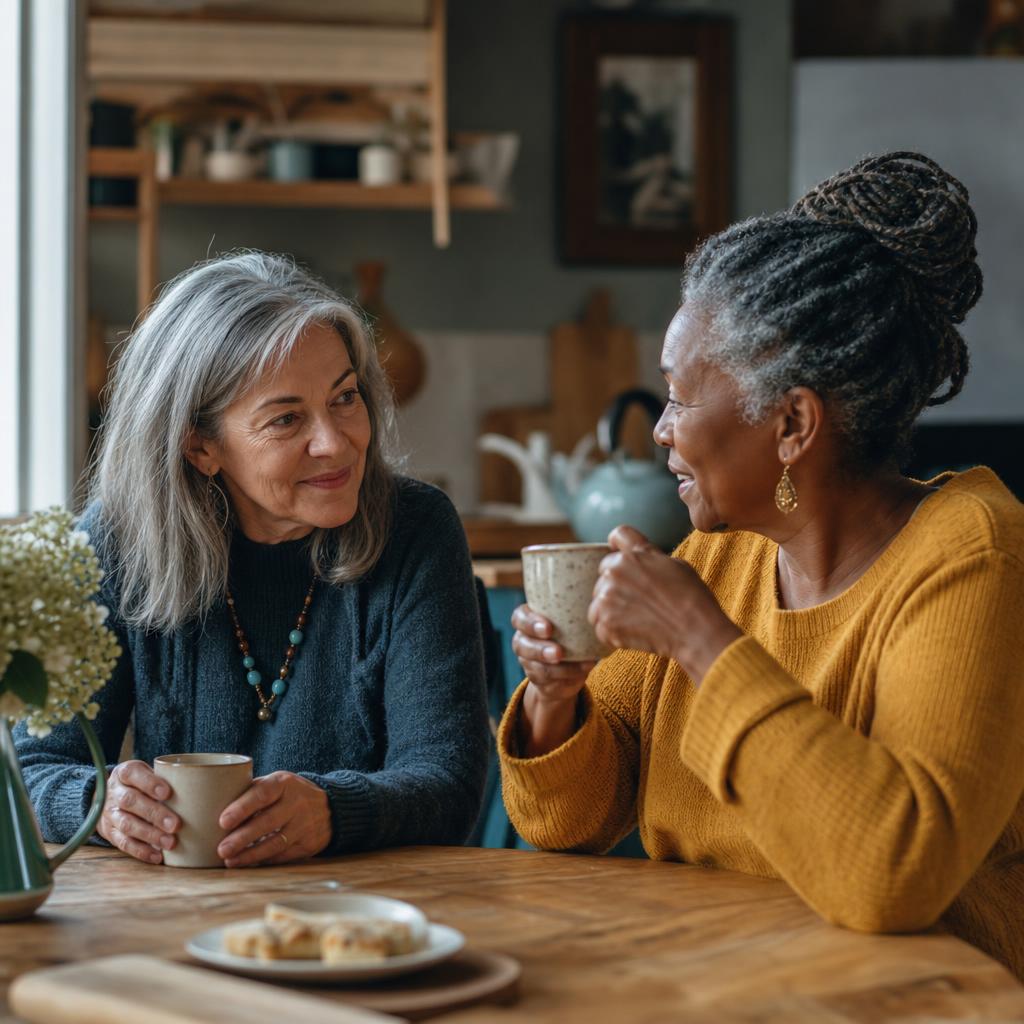
Ask people what they are planning for later life and you will hear about pensions, housing, exercise and perhaps the dream of finally learning Italian. Ask a different question — who would notice if you were unwell and could not get to the shop? — and the conversation often becomes quieter.
This is not a test of whether you have enough friends, nor a reason to turn relationships into an insurance policy. It is a reminder that health and independence are lived among other people. Sometimes a friend becomes a carer; more often, support begins with ordinary things: a lift to an appointment, a meal dropped off, a check-in after a difficult week, or someone who knows when your absence is unusual.
Care is not only something families provide
In everyday language, “caregiver” can sound like a formal job or a relative doing everything. Informal support is usually messier. A neighbour may collect a prescription; a friend may help someone understand a letter; a former colleague may make a regular call during recovery. These acts can sit alongside paid care, family help and public services, rather than replacing them.
A 2023 systematic review of older adults receiving formal or informal care found that their support networks could include family, friends, neighbours and community sources. It also found that network strength, reciprocity and geographical proximity influenced the support available. That is useful evidence for taking relationships seriously, but it does not mean every friendship will become care, or that friends can safely substitute for professional services.
Many people move between helping and needing help across a lifetime. A friend might accompany someone through surgery this year and receive practical help after a bereavement or house move later. The exchange need not be equal in each moment or recorded in a ledger. At its best, reciprocal life is a broad pattern: people notice, offer what they can, accept help when needed and recognise limits.
Our households and families do not all look the same
There is no single family arrangement that guarantees support. People may live alone after a separation or bereavement, have no children, have relatives who live far away, or simply prefer a small family circle. Friends and neighbours may be close by; adult children may provide substantial care across distance; some people have both, and others have neither nearby.
ONS estimates that 8.4 million people in the UK lived alone in 2024, up from 7.6 million in 2014. Living alone is not the same as being lonely or unsupported: many people value living independently and have strong relationships. The statistic does, however, remind us that a nearby household member cannot be assumed. Planning for later life should include who is around and how help could work, not just the name of the person on a form.
Social media can keep us in touch, and occasional socialising is valuable, but neither automatically creates dependable connection. A large contact list is not the same as having someone who knows your routines or feels comfortable asking if you are all right. Rather than counting friends, consider the texture of your connections: who do you talk with honestly, who shares an ordinary weekly ritual, and where would you turn for different kinds of help?
A community is built through repetition
“Community” can sound like something other people already have. In practice, it often grows through low-key repetition: becoming a regular at the same café, walking group, allotment, choir, library event, faith community, sports club or volunteer shift. Familiarity gives conversations room to develop. Seeing someone repeatedly can make it easier to move from a nod to a chat, and eventually to an offer of practical help.
Researchers sometimes discuss close-knit social structures such as Okinawa's moai, groups whose members share social and, in some cases, practical support over time. It is an interesting example, not a ready-made formula to import or proof that one arrangement causes long life. The transferable idea is more modest: recurring relationships are easier to sustain than good intentions that never reach the calendar.
Volunteering, neighbourhood projects and intergenerational activities can create contact across different ages and circumstances. So can a weekly walk with the same people or a standing Sunday lunch. These activities need not be optimised for health. They can be enjoyable, useful, meaningful, or simply a reason to leave the house on a grey Tuesday.
The WHO Commission on Social Connection describes social connection as an important part of health and well-being, while also recognising that isolation and loneliness are not interchangeable. The practical point is not to panic about a quiet week or prescribe constant company. It is to make room for the kinds of connection that feel right to you, and to notice when your social world has narrowed in ways you do not want.
Ask two questions without turning them into a test
Try asking yourself, gently: “If I disappeared for three days, who would notice?” The point is not to stage a dramatic experiment or judge yourself by the answer. It is a prompt to see whether someone has enough context to notice a change — and whether a practical check-in might be helpful.
Then turn the question around: “Whose absence would I notice?” Relationships do not only protect us from being alone; they are part of how we participate in other people's lives. A message, invitation or visit can matter in both directions. If someone has become quieter, a simple “I've missed our walks — shall we pick a day?” is often kinder than assuming they are busy forever.
Not everyone has a ready-made network, and barriers are real: disability, caring responsibilities, money, transport, language, discrimination, social anxiety and grief can all make connection harder. Start with something manageable and accessible. A phone call can count. So can a local group with a low-cost option, a neighbourly exchange, or asking a trusted organisation what is available nearby.
Make practical plans, not friendship contracts
There is a difference between cultivating people because you may need care and building a life in which care can happen naturally. Nobody wants to feel recruited as a future unpaid service. Friends also have their own limits, health and responsibilities. Trust grows through genuine interest, shared time and being reliable in small ways — not by quietly assigning someone a role they never agreed to.
Some practical steps can still make support easier to give and receive:
- Keep old friendships alive with a recurring call, walk or meal, and make space to meet new people too.
- Become a regular somewhere that suits your interests and access needs; give familiarity time to grow.
- Offer help to neighbours and accept reasonable offers yourself. Small acts make asking less awkward later.
- Volunteer, join a group, or invite someone into a ritual that can recur without much planning.
- Do not make work your entire social network. Keep relationships and interests that can travel with you through job changes or retirement.
- Think about where you want to live later: transport, local services, accessible housing and nearby people all shape independence.
If you anticipate needing substantial care, talk openly with people you trust about what is realistic — and investigate formal support, benefits, local authority advice and health services. Friends can be part of a network, not the whole care system. A conversation before a crisis can reduce guesswork without pretending that everything is predictable.
Longevity is also a question of belonging
Planning the next part of life means more than deciding what to stop doing at work. It includes the ordinary week you want, the places you feel at home, and the people with whom you can share both fun and difficulty. Our guide to starting your life-design journey offers a broader prompt: begin with the life you want to live, then consider what would support it.
Health habits and relationships often meet in ordinary activities: taking a walk with someone, sharing a meal, helping at a community garden, or having a reason to go out on a day when motivation is low. If pain has made movement or social plans harder, our practical guide to non-drug approaches to back pain explores ways to work towards valued activities. For a wider view of capability and the different pillars of a life well lived, think beyond a single health measure.
You can measure blood pressure, fitness, weight and sleep. Those numbers may help you make good decisions. There is no wearable that tells you whether someone will bring you a coffee when life goes sideways — or whether you will be there when they need one.
So, keep the people you care about in the plan. Not as a contingency resource, but as part of a life in which you are known, useful, welcome and able to ask for help. Some of the most important parts of ageing well are not biomarkers. They are the small, repeated ways we remain present in one another's lives.
Sources / Further reading
- SuperAging: When a Friend Becomes a Caregiver (discovery source).
- Ho et al., BMC Geriatrics (2023): Examining the social networks of older adults receiving informal or formal care (systematic review).
- Office for National Statistics: Families and households in the UK, 2024.
- World Health Organization: Report of the Commission on Social Connection (2025).
- British Geriatrics Society: Formal and informal caregivers.