Understand · Longevity Coach article
Thinking of Going Back to Work After Retirement? Work Out What You’re Actually Missing First
Thinking about going back to work after retirement? First work out whether you miss the job—or the structure, people, purpose and identity it provided.
By Longevity Coach Editorial Team ·
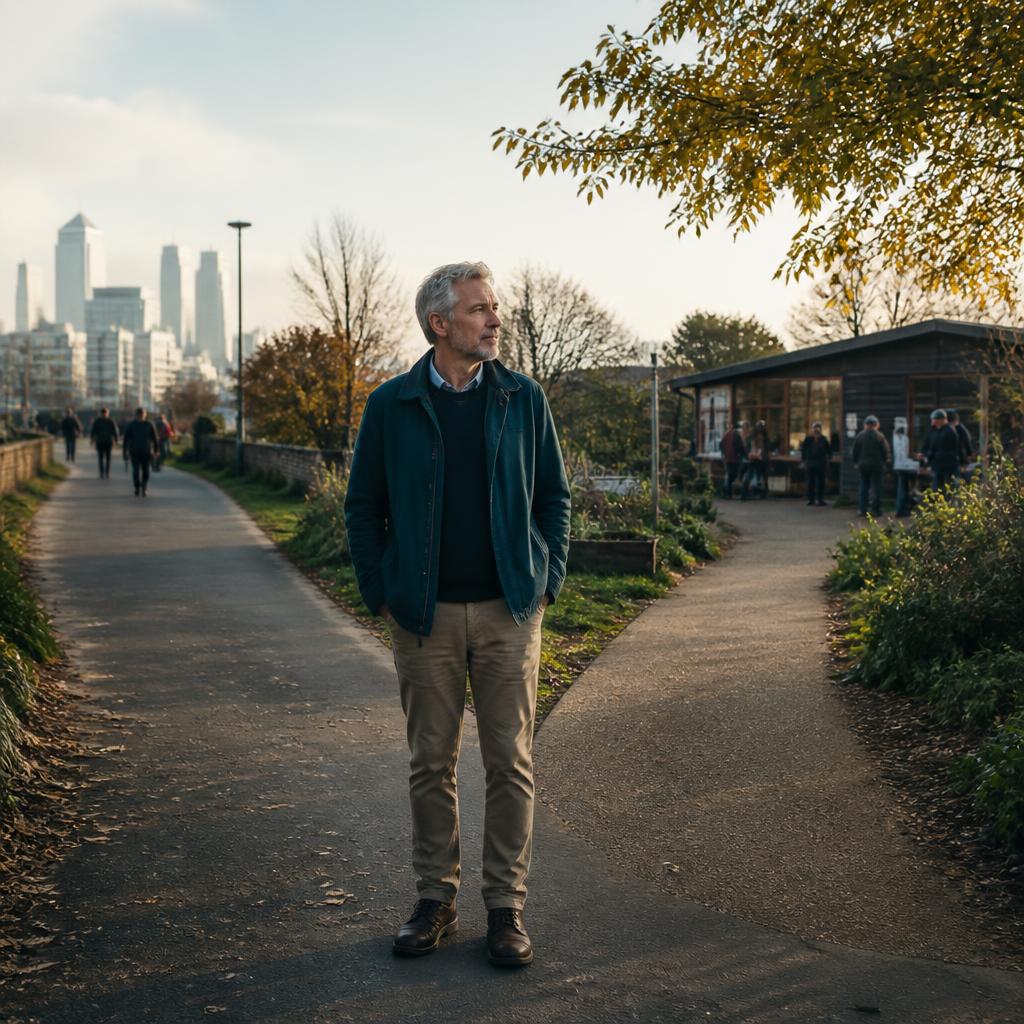
Going back to work after retirement can sound like the obvious answer when the newly open calendar starts to feel flat. A recent iNews account about trying that move, then regretting it after two days, raises a useful question: did the person miss the job itself, or the things the job had quietly supplied?
Those are not always the same. You can miss colleagues without missing the office politics. You can miss a reason to get dressed without missing the commute. You can miss being useful without wanting your old deadlines back.
There is no universal lesson in one person’s experience. Some people return to work and are glad they did. Others discover that the familiar job restores a few things while crowding out the life they had hoped to build. Before signing up for the old pattern again, it helps to name what you want work to do for you now.
Retirement is a transition, not a purpose
Retirement is often discussed as a date: the day the pay cheque changes, the pension starts or the final email is sent. But the date only describes when one structure ends. It does not say what the next week will contain.
For many people, life after full-time work may last a long time, potentially decades. That creates choices as well as practical questions. How much do you want to work? Who will you see regularly? What will make a Tuesday feel worthwhile? Where will money, care, health and rest fit? There is no need to answer all of these at once, and no single retirement pattern suits everyone.
Health can give people more options, but it does not write the script. A good fitness routine cannot decide whether you want to mentor someone, travel, help with family, learn a language or keep one day of paid work. Longer life is partly a planning question: how do you want to use the time and capabilities you have?
Work bundles several needs together
A job is rarely just a task list. It may provide income, a timetable, daily conversation, status, a challenge and a familiar answer to “What do you do?” Even work you were ready to leave can have been doing some useful things in the background.
That is why returning can feel so compelling. One decision appears to bring back the whole bundle. It may also bring back the parts you were relieved to leave. The first step is to separate the needs rather than treating “work” as one indivisible thing.
What are you actually missing?
| What you miss | What work used to provide | Other ways to meet that need |
|---|---|---|
| Structure | A timetable, deadlines and a reason to leave the house | A training plan, volunteering shift, regular class, project or a few dependable weekly anchors |
| People | Colleagues, conversation and shared routines | Clubs, community activities, family meals, group learning or a regular walk with someone |
| Purpose | Responsibility and a visible contribution | Mentoring, care, volunteering, making something or helping a local group |
| Challenge | Problems to solve and skills to use | Learning, sport, creative work, a community project or a small business idea |
| Status | A job title, recognition and expertise other people relied on | Sharing expertise, taking a community role or contributing to something others value |
| Money | Salary and, depending on the role, benefits | Part-time work, consulting or portfolio work may help; check the actual household figures and pension implications |
| Identity | A familiar answer to “What do you do?” | A broader account of the relationships, interests, skills and commitments you choose |
The alternatives in the last column are possibilities, not substitutes guaranteed to feel just like employment. A walking group may add routine and people; it will not pay the electricity bill. Volunteering can be meaningful, but it should not be used to disguise a need for income. Money is a practical question, not a mindset problem.
If finances are part of the reason you are considering a return, separate that from the question of purpose. Write down what income you need, what you already receive and what a particular job would really add after costs and any pension or tax effects. Our guide to financial planning for a longer life covers the broader planning picture. For decisions about pensions or tax, use current official guidance or seek qualified advice; do not rely on a general article to make a personal financial decision.
The risk of rebuilding the life you just left
Going back can restore useful parts of a working week. It can also reinstate the commute, fixed hours, deadlines, stress, office politics and the sense that your time belongs to someone else. If lack of autonomy was one reason you left, a return to the same arrangement may solve the loneliness of an empty Tuesday by filling every Tuesday.
That does not mean the return is a mistake. The iNews account is one person’s experience, not a rule. Some people miss the work itself and enjoy doing it again. Others want a different role, a different team or fewer hours. Some need income and have limited room to negotiate. The useful question is what version of work fits the reason you are returning.
Where possible, test before rebuilding the whole structure. Ask about a project, a fixed-term role, consulting, a gradual return or a specific number of days. Consider whether the work can be adjusted around the parts of life you want to protect. A trial is not always available, but a clear conversation about hours and expectations is better than assuming the old arrangement is the only one on offer.
Soft retirement is one option, not the answer for everyone
Between full-time employment and complete retirement there may be a middle ground: sometimes called soft retirement or a portfolio life. It could include some paid work, consulting, volunteering, learning, family, fitness, travel, community projects, hobbies and rest. The mix can change over time.
This is not a claim that everyone can afford to work less, or that retirement should become a beautifully managed schedule of self-improvement. People’s health, caring responsibilities, employment options and finances differ. Some will prefer to stop paid work; some will want to continue; others will need to work for longer than they planned. None of those choices proves that a person has designed life better or worse.
A portfolio approach is simply one possible way to avoid asking a single job to provide all your income, structure, relationships and identity. It can leave room for paid work while making space for the activities and people that employment used to push to the edges.
Longevity is not only a health problem
The challenge of longevity is not only staying alive and healthy for longer. It is building a life that still works when the old structures begin to disappear.
That includes relationships, purpose, money, community, health, work and time. These parts affect one another. A job may create social contact but leave little energy for a partner. Caring for family may bring meaning and pressure at once. Better health may make travel possible, while financial uncertainty makes it difficult to plan. There is no perfect balance that can be calculated once and then left alone.
It can help to think in small experiments rather than a grand retirement identity. Keep one paid-work day while trying a class. Set up a regular lunch before you leave a role. Offer to mentor for a few months instead of promising to volunteer every week forever. Notice whether the change adds something you want, or simply fills the time.
If connection is what you miss, our article on friendship and social networks explores ways people stay connected. If movement is part of the week you want to protect, see our guide to a varied, capability-focused movement week. Neither needs to become another performance target.
A practical check before you go back
Before accepting a return to your old job, give yourself a few quiet minutes with these questions. “Nothing much” is a legitimate answer to any of them.
- If I never returned to my old job, what exactly would I miss? Name the specific people, tasks, money, recognition or routine.
- Which of those things actually require a job? Be honest about what can be met another way and what cannot.
- Is this mainly about income? If so, treat it as a financial decision. Check the numbers and get appropriate guidance before changing a pension or making a commitment.
- What did I leave because I needed it to change? Consider time, stress, travel, autonomy, health and family responsibilities.
- Could I test a smaller version? Ask about hours, a project, a different role or a time-limited arrangement.
- What would I like an ordinary week to contain? Include work if you want it, but also people, movement, contribution, learning and rest.
Write two lists: what you want back and what you do not want to rebuild. If the first list is mostly people, structure and purpose, a return to work might still be right—but it is no longer the only idea on the table. If the list is mostly money, the next step is to understand the financial options rather than hoping a job will automatically solve every concern.
What are you preserving your health for?
Blood pressure, fitness, sleep, weight and activity can all matter because they support the ability to do things. They are not the answer to what those things should be. The next question is: what are you preserving that ability for?
That is why Longevity Coach starts with Life Design: what deserves more room in the life you want? From there, the Longevity Ladder can turn a chosen direction into one practical next step—not a prescription to become more productive. You can explore Life Design and how it connects to a personal Longevity Ladder.
Longevity gives you more years. Life Design helps you decide what to do with them.
Retirement does not have to be the absence of work, and a longer life does not require you to fill every minute. The aim is to build a next stage with enough money, people, structure and freedom for it to feel like yours. Before going back, find out what you are actually missing. Then decide whether the old job is the right way to bring it back.
Sources / Further reading
- iNews: “I ‘unretired’ and went back to work – and regretted it after just two days” (shared via Apple News). Used as the prompt for this original Longevity Coach article; the story is not evidence that one retirement choice suits everyone.
- GOV.UK: Working after State Pension age, for current guidance on work, pension, tax and National Insurance considerations.
- GOV.UK: Help and support for older workers.